The main question I would like to figure out throughout this blog, me being a Fashion Marketing student, is if the artist follows the trends or are the trends following the artists.
The questions is a complex one to answer as it has different meanings. Designers have been complaining for a few years now, about fast fashion destroying their good names with cheap copies of their original work, making it lose value in the eyes of the customer and affecting their business. Fast fashion retailers don’t only copy designs by luxury designers. Sometimes, they go after the little guys, and, unfortunately, the lack of copyright protection for fashion design still stands. And it has become an important issue for up-and-coming designers; copycats can be detrimental to building their business, especially because larger brands have the mass customer base and the funds that many indie designers don’t.
Do the trends make the artist or does the artist make the trends? We know that social media impacts profitability for companies, which means that their presence on social media platforms is crucial for the success of their businesses, however fashion trends come from sources that have access to a wide audience. Social media is a way to vehicule and distinguish those said trends. The misconception lies in the thin line between copying and using content as inspiration. Many brands and artists face legal consequences
Trends are usually monitored and easily predicted, this is a must for a retailer. In overview, trends come and go in waves and cycles. For commercial artists, knowing how to reproduce the current style is never a bad thing. Artists have always had different sources of inspiration and references. Emulating and copying can make things a lot easier, but it will not challenge the creative part of an artist’s process but simply hone that which is already there. Social media has allowed people to get equal representation in the field they desire and designers can capitalize off of the free marketing it brings
More and more people are challenging traditional gender roles. The debate started with the questioning the gender discrimination in the workplace. A bit topic that had people wondering why there was unequal pay in the first place between men and women. Men were considered more reliable and therefore better for companies on the long term while women were considered to be better for household chores or raising children and staying at home. Men and women’s roles in society are individually changing. The dynamic is developing.
Research found that in 1992, a survey was conducted that revealed that 80% of men under the age of 29 wanted jobs with more responsibility in comparison to the 72% of women under the age of 29 who did. As the world progressed the desire for more responsibility decreased for both genders. In 2008, studies showed that approximately the same number of men and women believed in traditional gender roles. It is normal that older generations hold more traditional views on gender and roles than younger generations.
Traditionally men have worked outside their homes and served as the breadwinner of their families. Holding some of the most powerful jobs in society (congress, lawyers…), while women were expected to stay home and care for their families, and in the past even if they had jobs they would be assigned stereotypically female professions (secretary, nurse…). In the 60’s and 70’s the world went through a cultural revolution.
Women have been making progress for hundreds of years, however they are not the only ones to be victim of such stereotyping. There was a power shift toward women at work and home. The reason is that now to get a good job, you have to have a good degree and it is a fact that only 40% of college graduates are men and the other 60% are women. However working women in America are still earning 0.79$.
Men and women’s role have become a lot less strictly defined. Reaching parity is a matter that involves the whole population, including children.
The truth is men and women do not need to have different items of clothing. Except for their genitals, children do not have any secondary traits that differentiate them from one another (for example: their breasts or hips have not yet developed or facial hair…). Which means that they could dress the same in a perfect world. However, their parents are the ones dressing them and they impose those differences at a very young age onto their children until it becomes common sense for them. ‘Little boys can not and should not dress the same as little girls’ is what they are taught. It would be considered “culturally inappropriate” to dress them the same way. Children are now more than ever, very susceptible to everything their environment and everything they see and use through technology. Information is much faster spread onto to mass media and social media.
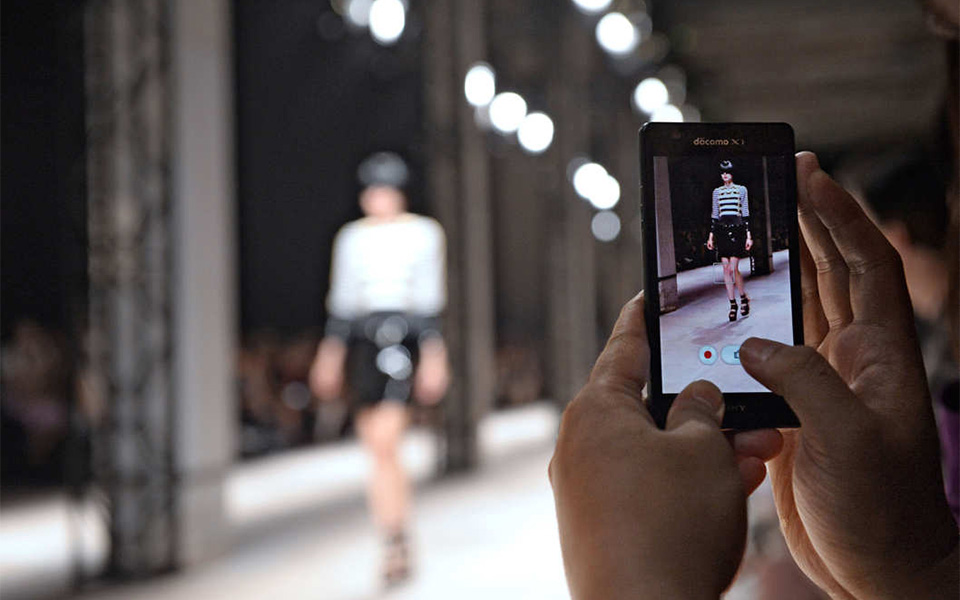
Social media has not only changed the way that we consume information, but it has also shifted the way we think about fashion. Due to social media platforms, new trends are being created every day. Social media has also made it possible for influencers and entertainers to start getting the attention of major fashion houses who collaborate with these people in order to market to a different audience. Social media has given brands a creative platform to market their products and gain new business (Quote by Charles Royals). Marketers have convinced the world, using trends, subcultures and many other elements, that there is a certain way to dress appropriately for men and that way differs from women’s. Companies profit a lot from this and use it to implement their strategies and promote it by build their strategies around it.
Some say education is key for breaking gender stereotypes. Education has a big part in it sure; when you are taught right from wrong from your parents, it shapes us as individuals, into the adults we are to become. However gender roles have been around for longer than our parents and their parents before them. Education and improving the views of our society could break the pattern but what about Genderless Fashion ?
What is Genderless Fashion?
In the past couple of years, more and more designers have adopted a new style of clothing and accessories that prides itself on being neutral from both sides of the spectrum. Unisex clothing aims to minimize differences between genders. In this new era designers are trying to introduce to their audiences, two opposing sides come as one on the runway. Outfits, adornments and even hairstyles and makeup have become applicable to both genders in order to separate themselves from the stigma.
The beginning and evolution of genderless fashion
A long time ago, men wore pants for comfort and convenience to be able to ride horses. Shortly after, during the 1920’s and 30’s, women started wearing trousers in order to work the jobs that the men had left to fight wars. After that, memorable designers such as Coco Chanel broke the glass ceiling by introducing fashionable pants during an era where it was considered audacious. The fight was a long one but pants became normal for both genders to wear and also became an avant-garde contemporary modern garment. Eventually both men and women wore pants. The term “gender” was firstly used to describe the social and cultural aspects of biological sex in the 1950s. In the fashion industry, french designer Pierre Cardin attemptes a uni-sex collection in 1968 that affected his brand greatly. He opened up a controversial conversation and took a hit for it. He altered his designs, choice of colours, choice of models and presentation, his advertisements, his marketing strategy and took a big risk that paid off well after his time.
Speaking of : Colours also are highly associated to genders.
When a man decides to wear colors associated with women’s, everyone automatically assumes he is signaling his gender identity or sexuality. The concept of gender fluidity has been present mostly in the past 5 years. More and more celebrities try to send a message of acceptance for the Trans Community and , wear close that have no gender association in way that agrees with their viewers and followers. Brands and designers are starting collections distancing themselves from traditional looks and instead implementing a Unisexe style. Colours are a big aspect of the change, because brands used to use colours to persuade consumers into thinking that blue was for boys and pink for girls affecting future generations. Colours are very powerful, because they can be very communicative, so it is important to send the right message for the generations to come. People associate colours to brands, feelings, products, experiences…
It is no secret that children have always followed the example of adults around them. Their development, growth and education is highly shaped by the adults they associate with. Children are very susceptible to role models, and in the Fashion Industry there are a lot of role models. There are good ones and bad ones certainly, but they have power over the minds of these children. Role models gain more power with the development of technology and the easy access it comes with. Kids can find anything they want online, they watch their favorite celebrities following trends and they wish to imitate them. The advancements in technology have been gradually affecting younger generations as they come. Generation Z, or people born after 1995, are constantly evolving. They are changing the traditional style from Generations that preceded them (Gen X and Y). This evolution is affecting the gender stereotypes for the better. As mentioned in previous blog posts, gender less fashion is attempting to challenge representations of gender fluidity in fashion. In the streets of Montreal, one could notice that more females are dressing in uni-sex clothing and people are getting playful with their choice of colors and hairstyles… Celebrities like Jaden Smith who wears clothes by acclaimed designers made for women , at prestigious events captured and seen from all corners of the world, has a big influence on his audience as well as his career. A celebrity is seen as innovative and authentic and open-minded attracts more followers.
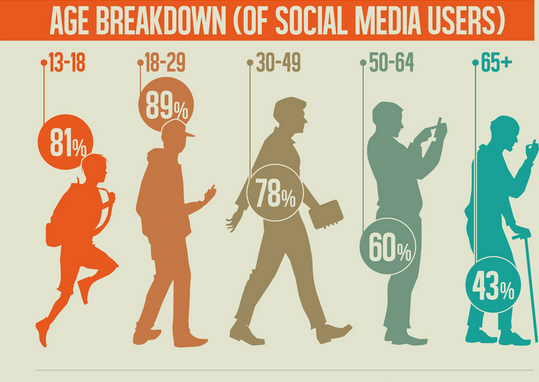
If one were to ask a group of millennial girls what their interests, opinions and values are, no doubt that one would see answers repeating from one respondent to the next. This is because people presenting themselves in a way that matches their digital impression management. Social media is slowly eroding the sense of individuality, making you feel like you just viewed the same picture one after another as you scroll through your timeline. Social networks and apps are meant to give the public a sense of belonging, and always feeling connected. We are constantly connected to our device and on these platforms because these apps target the 1% chance we have for fear of missing out. {slot machine} By spending so much of our free time online, it will alternately change how we view and present ourselves. Impression management are important in portraying the ideal sense of “me” to the public. Millennial’s rank highest in studies for spending the most time on social media platforms, which is no surprise that they are the most influenced and doing the most for social approval. [ telegraph UK] Our digital impression management is not only crucial in how others see and view our public image but it sets a standard for ourselves and others. By being able to edit and calculate our online activities, in order to present the best ideal of self to receive social approval, it is advertently forms a deceiving portrayal of you to yourself and to the public.
Because this young audience is subjected to the information they collect from social media, marketers use this heavy influence they have to market to the appropriate target consumer via influencers. I have mentioned before Jaden Smith, but there is many other celebrities that use the powerful of direct and instant communication through social media platforms to create trends or to market the already existing ones. Social media has really revolutionized the way the fashion industry works in my opinion. It has opened up doors for another major category of blogging, and influencers with thousands of followers are becoming more and more crucial to a company’s marketing and PR success.
For example: Kylie Jenner and her wigs. Kanye and his shoes.
Are the benefits of technology and social media beginning to out-weight the risk of using them?
The use of social media brings brands and customers closer than ever before. Since the birth of technology, there has been many breakthroughs. Whether it be through science with medical advances or it be socially, helping you find your soulmate, technology has been a source of helping humanity in almost every aspect of life. In addition, technology and social media plays a crucial role in modern communication, as well as helping us maintain a sustainable economy by providing jobs and the effects on which it has on saving the environment, like the recycled cellphones used to save the rain forest. Throughout the revolution of technology one can see the benefits that these technological innovations have brought to the world but along many great benefits there are just as many risks. With the advancement of technology, more and more people should be aware of the effect and understand how the tool we utilize daily is slowly shaping our world environmentally and socially. Throughout this blog, we will explore paradox of social media and technologies and some of the issues that it presents in impression management and behaviors as well as the heavy influence it truly has on the Fashion Industry. We will explore whether social media is changing the norms of how we interact with one another, whether social media has an effect on how we present ourselves to the public and if social media and technology plays a crucial roll in first impression.
What are some of the benefits of social media presence? They are numerous and very effective:
gain an advantage over your competition and reach new audiences
As discussed above, social media as evident faults in altering how we communicate and how we present ourselves, but another major risk is how social media is changing our attention span. Our attention tend to switch to our device when we feel that there are not gratification to be received in real life. There are two ways in which technologies can interrupt us. One way being that when our own attention switch to our device without the influence of anything but to receive immediate gratification. For instance, if you’re sitting with a group of friends and you turn to your phone for excitement then this is an endogenous form of interruption. The second way in which technologies interrupt our attention span is through external forces. The way that these devices and technologies are unconsciously interrupting our mind is so profound that people are not even aware that simply hearing a notification can distract them from accomplishing a task, even when they don’t view the message.
The impact in which technologies play functioning daily tasks is so great, that even merely seeing a device can impact cognitive performance towards performing these tasks. Technology allows us to maintain a just the right level of connection but also assist in deterring our social interactions and how we communicate. With the internet emerging as a robust platform for sharing models to grow and thrive, consumers are increasingly engaging with the concept of access over ownership in fashion, especially in premium/luxury apparel.
Though technologies have been very useful in the advancements towards many subjects, the importance in understand some of the negative impact in which these technologies have is crucial in today’s lives. More people should be aware that social networking sites play a subconscious role in how we portray ourselves, and in hindsight, who we are. People should also be aware of how technologies and social media can change the norms of how to interact IRL. In addition, the importance in understanding the how technologies play a factor in our disruption attention span, one can start to re evaluate how one spend one’s time online, in order to promote and achieve cognitive, psychological and social balance. By always referring to our phones to form relationships, to express who you are and to remember simple tasks, we are making technologies the most important component of our lives and we are slowly further disconnecting from another. How ironic that the technologies and networks that are meant to keep you connected, would be one of the biggest cause of social isolation and the devices that are meant to aid us in daily tasks, is robbing us of our attention span and ability to interact IRL with others.



 Are the benefits of technology and social media beginning to out-weight the risk of using them?
 MEDIA N FASHION